

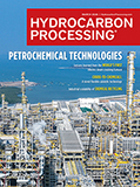
Europe
CB&I, Chiyoda win engineering, design work for Mozambique LNG trains
The FEED will deliver designs for the initial phase of the Mozambique LNG project of four trains each with 5 million tpy of LNG production capacity. This project is the first LNG project in Mozambique, and it has the potential to expand its capacity up to approximately 50 million tpy of LNG in the future.
Optimize LNG boil-off gas systems for regasification terminals
Depending on LNG composition, N2 content and plant operating mode, an operating pressure of 7 barg to 8 barg was found by the study to be the optimum pressure range.
Molecular sieves in gas processing: Effects and consequences by contaminants
The principles of adsorption on molecular sieves are easy to understand, but practice sometimes reveals traps to avoid.
Improve evaluation of brittle-fracture resistance for vessels
This article discusses a new approach and spreadsheet tool for engineers that can be used to provide operating pressure limits as a function of vessel-metal temperatures.
Evaluate pressure relief system forces in existing installations
The purpose of this study is to limit the number of relief valves that require rigorous engineering calculations to determine the adequacy of the installation.
Improve your plantwide steam network
When optimizing an existing steam network, design and process engineers need a complete understanding of all aspects of the existing system. Accurate energy and material balances must be established.
Update on wet and gas compressor seals
Shaft seals keep compressed gas from leaking out. The need for leak prevention may include process economy, safety and environmental protection. Moreover, the process gas will usually have to be kept ..
HP Reliability: TAMU Turbo and Pump symposiums still leading
Beginning in 1971, the Turbomachinery Laboratory of Texas A&M University (TAMU) organized the first of now 41 consecutive annual turbomachinery symposiums, now known as the TAMU Turbo. In 1984, Texas ..
HP Integration Strategies: 3D laser scanning delivers benefits in hydrocarbon processing facilities
Present 3D laser scanning (3DLS) technology can be used in many diverse applications; it assists in improving efficiency and quality, and reducing time-to-benefit. For discrete industries, 3DLS can sa..
HP Water Management: Need a package boiler in a hurry?
Acquiring a package boiler is an unplanned event that requires process engineers to solve this completely unfamiliar problem. To reduce the chaos of replacing them, here are helpful ways to resolve this situation.
- Allied Biofuels signs PIA with Uzbekistan to advance $6-B biofuels refinery project 4/10
- Nufarm strengthens strategic collaboration to support long term growth in biofuels production 4/10
- Pertamina and CRecTech sign MoU to explore pilot biogas-to-biomethanol facility in SEZ, Indonesia 4/10
- Shell Chemicals and Syensqo partner to deliver low-carbon ethylene oxide solutions 4/10
- HAMR Energy’s nationally significant fuel projects selected for Australian Government’s Investor Front Door Pilot 4/10
- HD Hyundai Heavy Industries builds world's first ammonia-powered vessel 4/10